By Dada AYOKHAI
The protracted dispute over the traditional stool of Ewu Kingdom in Edo State has taken another significant legal turn, following two separate orders of the Edo State High Court, Benin City.
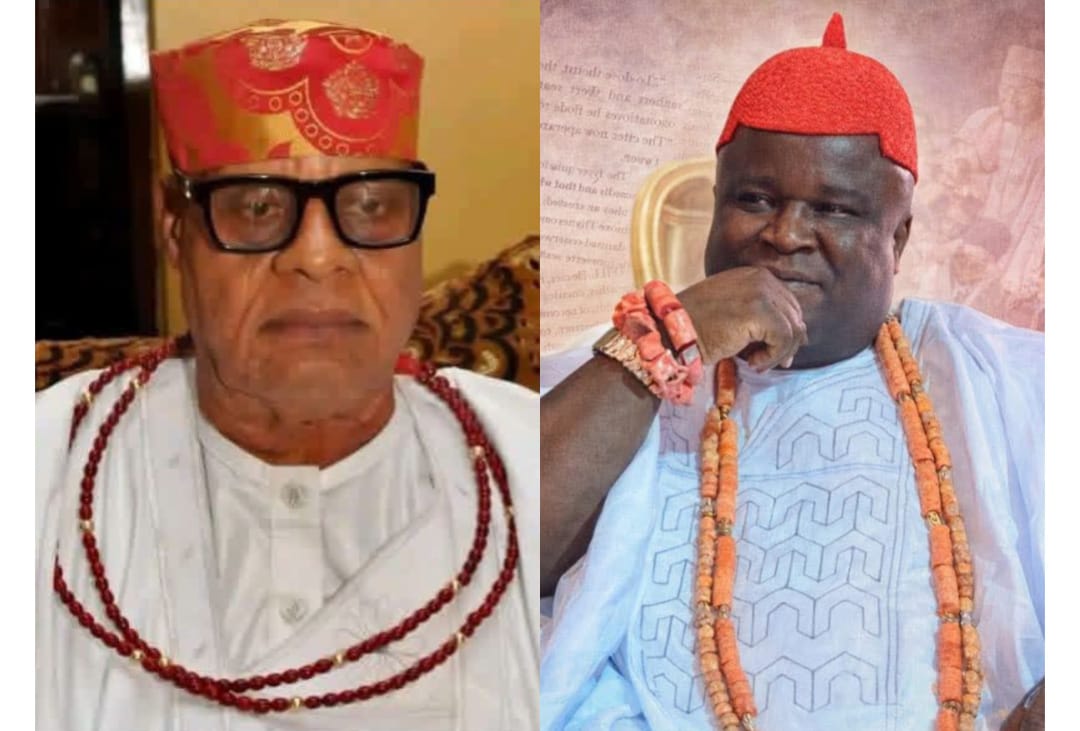
The court granted His Royal Highness Jafaru Isesele I, the Onogie of Ewu, leave to commence judicial review proceedings against the Edo State Government and other authorities over the implementation of the Supreme Court judgment recognising his entitlement to the traditional stool.
In a related development, the same court has granted a Garnishee Order Nisi in favour of Isesele against Prince Rasak Ogiefo, in proceedings seeking to recover a combined N13 million in outstanding costs awarded by the Supreme Court in two separate decisions arising from the long-running chieftaincy dispute.
The two orders made on 5 November by Hon. Justice I. O. Omotoso (Mrs.) of High Court No. 11, Benin City, in Suit NO. B/242/2026 followed separate ex-parte applications filed by Isesele on September 30 and October 7, 2026, respectively. Both applications were argued by his counsel, K. O. Obamogie, SAN.
In the first application, Isesele sought the court’s permission to institute judicial review proceedings against the Governor of Edo State, the Edo State Executive Council, the Attorney-General of Edo State, the Commissioner for Local Government and Chieftaincy Affairs, Esan Central Local Government Council and Esan Central Traditional Council.
The application seeks, among other reliefs, an order of mandamus compelling the relevant state authorities to implement the judgment of the Supreme Court delivered on July 19, 2024, in Appeal No. SC.147/2014, Prince Rasak Yesufu Ogiefo v. His Royal Highness Jafaru Isesele I & Ors.
Specifically, Isesele is asking the court to compel the authorities to recognise his status as the legitimate Onogie of Ewu and formally approve, present and issue the Staff of Office and accompanying certificate or instrument of recognition.
The applicant also wants the court to compel the relevant authorities to take all necessary administrative steps to give practical effect to the Supreme Court judgment, including the publication or issuance of appropriate official instruments recognising his position.
A particularly significant aspect of the application is the allegation that the state authorities have failed to give effect to the subsisting Supreme Court judgment.
Relying on Section 287(1) of the 1999 Constitution, as amended, Isesele is asking the court to declare that the Supreme Court judgment is binding on the respondents and that they cannot lawfully refuse or neglect to implement it.
The application further seeks an order directing the respondents to pay him the financial benefits attached to the office of Onogie of Ewu with effect from August 6, 1997.
According to the application, the financial benefits had previously been adjudged by the High Court in Suit No. B/437/2001 on February 10, 2005, affirmed by the Court of Appeal on February 14, 2014, and further reaffirmed by the Supreme Court in its judgment of July 19, 2024.
In granting leave, Justice Omotaso held that the applicant was within his rights to institute the judicial review proceedings.
The court stated:
”I am of the opinion that it is well within the rights of the Applicant to bring this application.”
The judge consequently granted leave for judicial review and directed the applicant to serve the Motion on Notice on the respondents for the determination of the substantive application.
The matter was adjourned to January 19, 2027, for hearing of the Motion on Notice.
In the second proceeding, Isesele approached the court for a Garnishee Order Nisi against Prince Rasak Ogiefo to recover N13 million in outstanding costs arising from two decisions of the Supreme Court in the same Appeal No. SC.147/2014.
The application sought to attach funds standing to the credit of Ogiefo in identified bank accounts, including his account with Zenith Bank