By DADA AYOKHAI
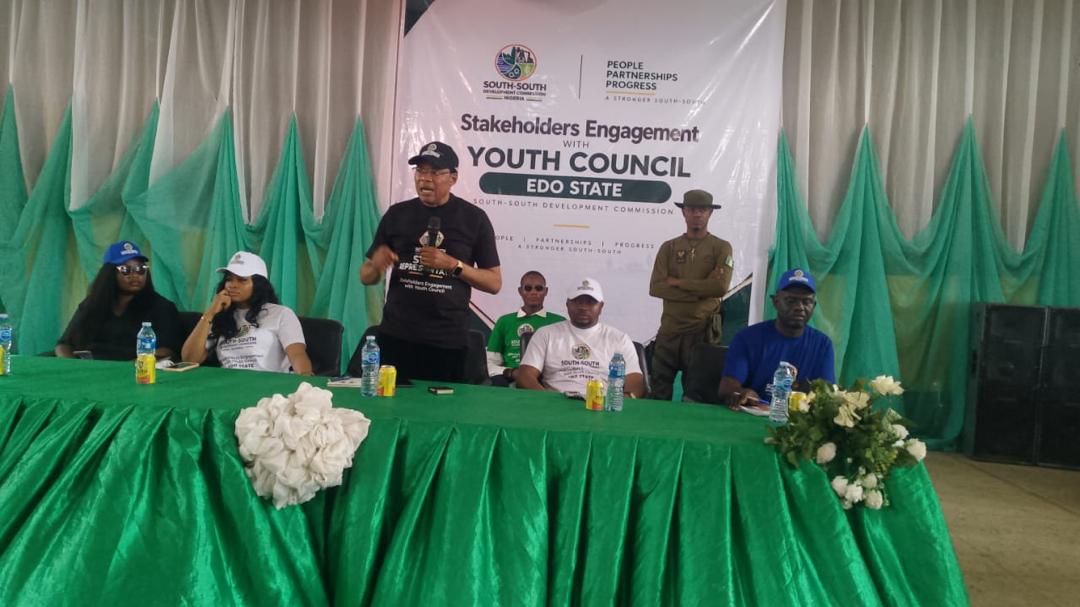
The South South Development Commission, SSDC has commenced fresh engagement with youths and other critical stakeholders in Edo State, pledging to make grassroots participation the foundation of its intervention programmes across the state.
The Edo State representative on the Governing Board of the Commission, Barr. Femi Oise Agge, disclosed this while addressing youth representatives drawn from the 18 local government areas of the state during a stakeholders’ Meet-and-Greet organised through the National Youth Council of Nigeria, NYCN
Grassroots Participation As Cornerstone
Barr. Agge said the Commission was established to address developmental gaps in the South South region and will not function as a “top-down” agency.
According to him, the SSDC is committed to ensuring that its projects and programmes directly reflect the needs, priorities and aspirations of communities across Edo State.
He explained that the engagement was designed to open channels of communication between the Commission and young people, who constitute a critical mass for development in the region.
“We are here to listen first. The era of policies and projects being designed in Abuja without input from the people is over. The SSDC wants to co-create solutions with youths, women, traditional rulers and community leaders at the grassroots,” he said.
Youths Tasked On Ownership And Monitoring
The Edo SSDC board member urged the youth representatives to take ownership of Commission projects in their various LGAs and to serve as monitors to ensure transparency and accountability.
He noted that for development to be sustainable, beneficiaries must be involved from conception to completion.
Barr. Agge added that the Commission is currently compiling data and proposals from all 18 LGAs to guide its first phase of interventions. Key areas of focus, he said, include education, primary healthcare, agriculture, skills acquisition, youth empowerment, and critical infrastructure
He assured that special attention will be given to programmes that create jobs and reduce poverty among young people in both urban and rural communities.
About The South Development Commission
The SSDC was established by the Federal Government to accelerate development in the South South geopolitical zone.
Its mandate includes initiating, planning and executing projects that address ecological problems, infrastructure deficits, youth unemployment, and economic diversification in the six South South states of Akwa Ibom, Bayelsa, Cross River, Delta, Edo and Rivers
The Commission is expected to work in collaboration with state governments, LGAs, traditional institutions, civil society, and development partners to deliver impact-driven programmes.
NYCN Commends Early Outreach
Leaders of the National Youth Council of Nigeria in Edo State who facilitated the meeting commended the SSDC for the early outreach, describing it as a sign that the Commission is ready to work with the people.
Comr.Moses Agwinede Joseph State chairman national youth council of Nigeria Edo state, said the council will mobilize youths across the 18 LGAs to key into SSDC programmes and provide feedback that will help shape implementation.
He said although the commission was inaugurated less than a year ago, it has begun engaging relevant stakeholders to understand the needs of people in Edo State and gather feedback that will guide its 2027 budget planning and project implementation.
He pledged the support of youths in the state towards the success of the Commission’s mandate.
Coordinator of the National Youth Council of Nigeria, Oredo chapter, Comrade Jonah Ogankpolor, he explained that the stakeholder meeting, organized in collaboration with the South-South Regional Development Commission, provides an important platform for youth and government agencies to work together.
Barr. Agge disclosed that the
stakeholders’ Meet-and-Greet will be replicated across other South South states as part of the SSDC’s regional consultation drive.
He said the Commission will, in the coming weeks, also engage women groups, traditional rulers, persons with disabilities, and professional bodies to ensure that no group is left behind in the development agenda.
The meeting ended with youth representatives submitting memoranda and proposals on pressing needs in their respective local government areas.