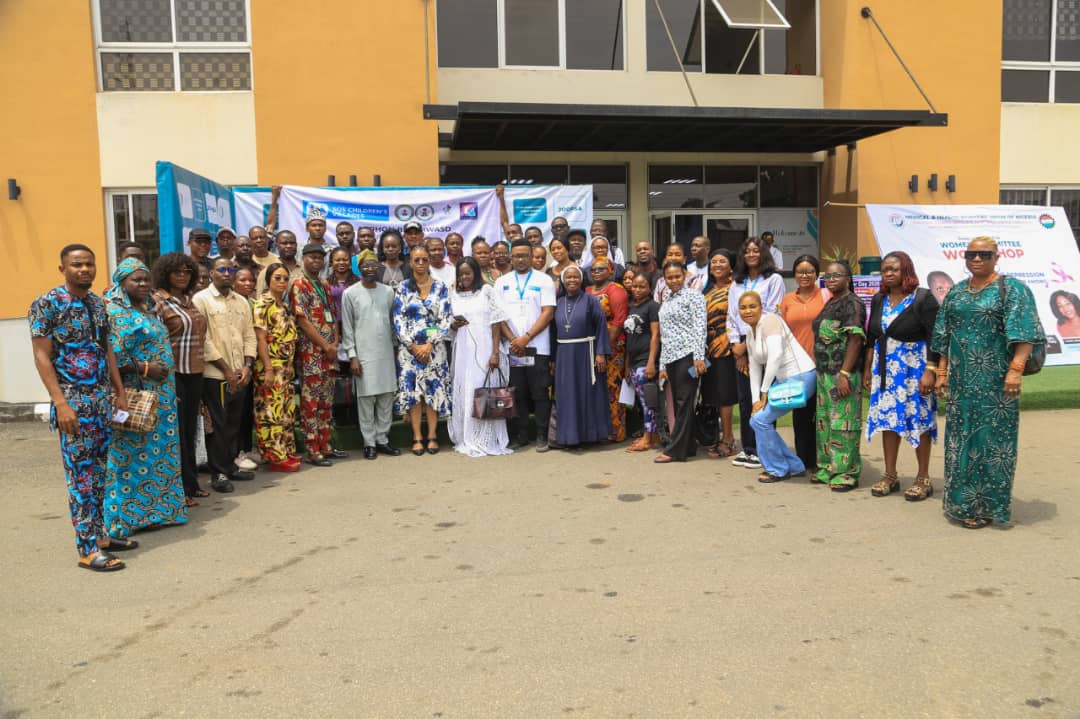
The Edo State Government, in collaboration with NGOs, has convened a strategic meeting with operators of children’s homes to promote the adoption of the Children First Software (CFS).
The one-day meeting, held at the John Odigie Oyegun Public Service Academy (JOOPSA), aimed to enhance digital monitoring, strengthen child protection systems, and advance foster care advocacy.
Government officials, child protection partners, and proprietors of children’s homes attended the meeting, which sought to strengthen commitment to safeguarding vulnerable children through improved coordination and innovation.
In her keynote address, the Commissioner for Women Affairs and Social Development, Mrs. Eugenia Abdallah, who was represented by the Permanent Secretary, Mrs. Joy Ihensekhien, described the gathering as more than a meeting, but a declaration of renewed commitment to protect children more effectively, modernize child protection systems and promote accountability.
Mrs Abdallah emphasized that children are the most vulnerable members of society, facing threats such as abuse, neglect, exploitation, trafficking and abandonment. She stated that addressing these challenges requires deliberate and sustained collaboration among stakeholders.
“When we collaborate, we reduce duplication of efforts, we improve case response time, we ensure holistic support for vulnerable children, we close systemic gaps that allow children to fall through unnoticed. Our collaboration must be structured, intentional, and sustained. We must move from working on silos to working in synergy.”
On digital monitoring, Mrs Abdallah emphasized that technology has become indispensable in stregthening child protection systems. She explained that a robust digital monitoring framework would enhance documentation and case tracking, generate real-time data for evidence based decision-making, improve transparency, and ensure timely intervention and follow-up.
“Digital monitoring is not merely about technology; it is about building a responsive system that ensures every child’s case is recorded, monitored, and resolved appropriately. With secure and well-managed digital platforms, we can transform how child protection services are delivered”, she added.
The Commissioner also stressed the importance of stregthening foster care advocacy to promote a safe, well-regulated, and supported family-based alternatives for children without parental care. She stressed the need for public awareness about foster care, establish proper screening and training for foster parents, ensure consistent monitoring, and clear operational guidelines.
Mrs Abdallah urged stakeholders to remain united in purpose and commitment as they advance child protection reforms, “Let this strengthened collaboration produce measurable outcomes, safer societies, stronger families, and a responsive child protection system that leaves no child behind. Let us rise above institutional boundaries. Let us rise above personal interests. Let us rise with one voice and one purpose; to protect every child.”
In his address, the National President of ASOHON, Dr. Gabriel Oyediji, commended the Edo State Government for creating an enabling environment for reforms and progressive child protection initiatives. He noted that child care practice has evolved significantly over the past decades, with higher standards, increased accountability and greater expectations
. According to him, operators of children’s homes are no longer merely caregivers but custodians of the future, accountable to government, society, and the children themselves. He emphasized that modernization, accountability and professionalism are no longer optional but essential in today’s child protection landscape.
While acknowledging the critical role institutional care plays, particularly in emergencies, Dr Oyediji stressed that it should serve as a temporary bridge toward family-based solutions. He encouraged home operators to view foster care not as a threat, but as a fulfillment of their mission to ensure the holistic well-being and long-term stability of every child.
The Country Manager of BEB, Mr Silas Gyang, provided a detailed demonstration of how the Children First Software (CFS) is used. He explained that the platform is a digital tool designed to support alternative care reforms in line with national guidelines, enabling operators to create comprehensive digital profiles for each child, including birth records, family background, health information, special needs, educational history, and all relevant legal documentation.
Mr. Gyang outlined the system’s five-step process to include registration of the child, development of an individualized care plan, investigation and qualification of family options, placement in a suitable family environment, and structured follow-up to ensure the child’s safety and well-being. He emphasized that the system strengthens accountability, improves case management, and ensures that every child is visible, traceable and supported throughout their care journey.
In his remarks, the Project Manager of SOS Children’s Villages Nigeria, Mr. Innocent Madueke, encouraged participants to translate the knowledge and insights gained from the meeting into concrete action. He emphasized the importance of adhering to established child protection standards, embracing digital tools responsibly, and sustaining collaborative efforts to achieve meaningful reforms in alternative care practices.
The highlight of the meeting was an interactive question-and-answer session, providing participants the opportunity to seek clarifications, share experiences and contribute recommendations.
Information, Education and Communication (IEC) materials were also distributed to support continued advocacy, awareness and implementation of improved child protection practices across the State.