By DADA AYOKHAI
The Etsako region in the Edo North district is well-known for producing skilled politicians and technocrats who have helped to shape and also execute critical government policies. This crop of seasoned techno-politicians equally made invaluable contributions to the growth of the state through their work in various governments.
The Etsako axis has a long history of producing influential individuals. Occasionally, new names come to the forefront, challenging the established figures in politics and public service.
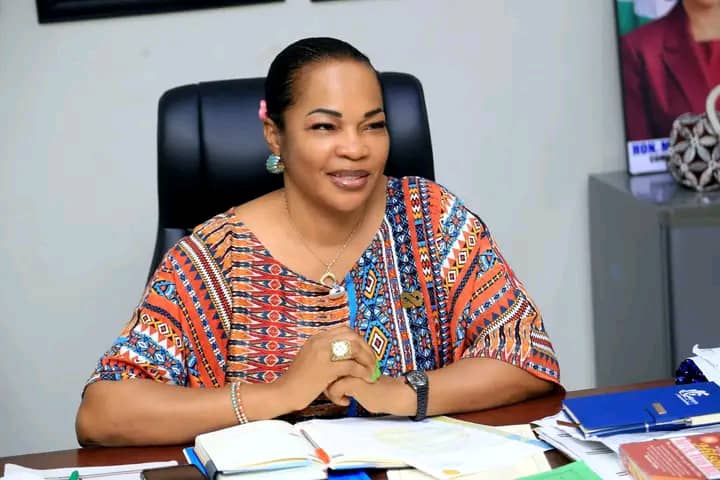
One such emerging leader is Mrs Eugenia Abdullah the Edo State Commissioner for Women Affairs and Social Development.
She is fast carving a niche for herself in the current administration led by Gov Monday Okpebholo.
Just a few years ago, Mrs Abdullah was not widely known. However, in a short time since joining the governor’s cabinet, she has become a prominent figure, with her ministry’s work seen as a key indicator of the administration’s success.
Mrs Abdullah graduated with a degree in English from the Edo State University, Iyamho, Uzairue. Before that, she earned a PGD in Public Administration from the Enugu State University of Science and Technology.
Her rapid rise in politics highlights her dedication and the significant impact she is having in her role.
A remarkable aspect of the compelling journey undertaken by Mrs Eugenia Abdullah, the Commissioner from Etsako axis of the state, is her straightforward yet dedicated approach to her responsibilities.
Since her appointment, she has wielded her influence effectively through an open-door policy that encourages dialogue and accessibility.
Beyond her charismatic disposition, Mrs Abdullah is determined to advocate for increased female representation in the democratic landscape, aiming to showcase the invaluable contributions women can make when given the opportunity.
Numerous individuals who have interacted with her during her tenure admire her distinctive blend of approachability and the opportunity that her commitment and enthusiasm for her work border on legendary for someone so young. Her humility and emphasis on a people-centred governance style speak volumes about her aspiration to create significant change within the remit assigned by the governor.
Governor Okpebholo can undoubtedly take pride in his thoughtful selection of Mrs Abdullah as a Commissioner—a decision that stands out as one of the most pivotal steps towards the reconstruction of Edo State.
Those acquainted with the remarkable progress she has made in her ministry confirm that Mrs Abdullah arrived well-prepared for the tasks at hand, equipped with a strategic blueprint that aligns with the governor’s vision for the state. Notably, she stands out as one of the few commissioners unafraid to embrace innovative technological solutions, applying them generously to address the various challenges facing her ministry. Such insights are well-founded, considering her diverse background in banking, the oil sector, and other industries.
A critical evaluation of her effectiveness as a Commissioner is most evident in her adept handling of the complex issue of street begging in the state. While this might seem like a mundane responsibility, it is one dicey issue that can quickly escalate into a tribal and religious conflagration. Others in similar roles have been dismissed for mishandling such sensitive matters in the past.
Rather than resorting to antiquated practices of merely evicting beggars from the streets, Mrs Abdullah employed a collaborative strategy that involved engaging with key stakeholders to form a consensus on addressing the issue. By doing so, she skillfully balanced the need to confront a social problem with the imperative to uphold the fundamental human rights of the affected individuals.
The Commissioner reached out to influential community leaders, including Arewa representatives and the Chief Imam of Benin Central Mosque, to highlight the harsh realities faced by the street beggars, which include exploitation, neglect, and abuse.
At the same time, she articulated the government’s perspective, emphasising a commitment to unlocking the potential of these individuals through skills development and educational opportunities, rather than merely removing them from sight.
Furthermore, during a recent visit by the management team of the National Obstetric Fistula Centre (NOFIC), Mrs Abdullahi seized the opportunity to advocate for collaborative initiatives between her ministry and various agencies aimed at expanding access to free medical services for women.
She stressed the importance of improving prevention, rehabilitation, and reintegration outcomes for vulnerable women in the state She poignantly observed that a significant number of women in Edo State endure preventable health conditions, such as obstetric fistula and uterine prolapse, often in silence, burdened by stigma, poverty, and barriers to healthcare access.
With hope and determination, she expressed her belief that the partnership between her ministry and the National Obstetric Fistula Centre would effectively tackle these pressing issues while providing vital support and services to affected women.